Thursday, March 24, 2011

Fasting insulin and weight loss

I think that it might be a good idea to state here that I'm a calories-in calories-out sort of a person. Arguing about metabolic advantage is pointless. When a person loses weight they convert tissue to energy, amputations excepted. Where the calories go, whether it is BMR, thermogenesis, glycosuria, increased spontaneous movement, shivering etc, the calories always go somewhere. As far as I am aware no one is suggesting that calories evaporate. Certainly I'm not.

I am on blog as stating that dietary fat, in common with carbohydrate, is stored in the aftermath of a meal. If you did not store your dietary fat it would sit there in your chylomicrons until you were as hyperlipaemic as a diabetic on an ADA approved low fat diet. All fat which is not used for on going metabolism must be stored. It may take a few hours to clear chylomicrons but they do get cleared. Mostly in to adipocytes.

EDIT: There is an update on this post here.


Okay, let's look at the Grey and Kipnis (GnK) 1971 paper.

If you take a human like ET, who is maintaining a bodyweight of 142kg by eating 4,200kcal per day, you can adjust her macronutrient ratio to pretty well whatever you like and she will remain weight stable, provided you insist that she always consumes 4,200kcal/d. Insulin will plummet on a high fat diet and this will release necessary fatty acids from adipocytes. These FFAs, the Spawn of Satan, will be both released and used at an increased rate. But will she lose weight? Of course not. She will just re-pack her adipocytes with the extra fat from her fixed, 4,200kcal, low carbohydrate diet. Many people, myself included, can maintain weight stability on a low carbohydrate diet for years.

There's a nice paper about fat accumulation under low insulin conditions on my hard drive. It happens. I will post about it when I feel like it, it looks interesting.

There was one participant in the GnK study, RP, who refused to comply with the study protocol. That's a 20% non compliance rate. She under ate and lost weight. We get no information about her caloric intake at any stage. We know relatively little about her diet (ie sugar vs starch) before the study. We have no idea what sort of carbohydrate was used in the study diet. The only information we have about which phase of the diet gave the weight loss is this graph:


But we certainly have a failure of compliance in this study where an obese subject refused scheduled food and subsequently lost weight. That's worth remembering.


Now let's look at hypocaloric conditions in the same paper. DB, SM and DM were put on to 1,500kcal/d (Keysian starvation) from 2,200kcal/d, 3600kcal/d or 3,800kcal/d respectively. They, err, lost weight. They lost weight pretty nigh on linearly over 12 weeks whether their fasting insulin was 40microIU/ml or 15microIU/ml, produced by adjustment of their carbohydrate intake from 240g/d, down to zero and back to 240g/d.

NB I am perfectly willing to accept these results as they stand but just as an aside; none of the individual records shows any suggestion of a weight shift related to to glycogen depletion/repletion on these changes in carbohydrate intake. The LC phase included zero carbohydrate. The HC version of 1,500kcal provided 72% of calories as some sort of carbohydrate, ie 240g/d. Maybe even Weight Watchers depletes liver glycogen following an overnight fast... A bit odd but probably irrelevant.

Back to the results. The caloric intake was fixed and low. Fat was stored in the LC/HF group and accessed easily because insulin was low. Under high carbohydrate intake calories were stored mostly as glycogen and glucose was metered out to avoid hypoglycaemia. Any fat lost by the lower-but-not-zero rate of lipolysis under high insulin levels was simply not replaced.

Just eat 1,500kcal/d and you will lose weight. Eat more than 1,500kcal and you're a pig.

The study was designed to get exactly these results.

But, out of only five subjects, one obese person became a food refusenick. Various studies have had similar compliance problems, with obese participants refusing food. Let's look at some of them.

I knew there had been a paper by Krauss looking at lipoprotein subgroups during weight stability on assorted carbohydrate intakes. It didn't measure plasma insulin but, if we accept anything from GnK's work, I think we have to accept that under weight stability we can dial fasting insulin by adjusting carbohydrate intake. At least between 4% and about 72% of calories.

Krauss looked at diets composed of 54%, 39% or 26% of energy from carbohydrate, with a bonus group on 26% carbohydrate and (gasp) 15% of total calories as saturated fat.... These folks were instructed to maintain weight stability. This quote had the LC brigade, myself included, giggling if not rolling around in the aisles.

"Despite our effort to maintain constant weight, the 26%-carbohydrate, low-saturated-fat diet group lost more weight than did the 54%-carbohydrate group during the stable-weight period. There was also a trend for a greater reduction in percentage body fat with the lower-carbohydrate diets (P < 0.02, analysis of variance)."

The numbers are in Table 2.

My browser squishes the table, these are the numbers that matter, simplified. Remember, everyone was supposed to be weight stable:


Some of these numbers made p<0.05 or even <0.02, shrug. What is more interesting is the trend in accidental weight loss. Oh and look, the sat fat group didn't lose the most weight, just the most fat. I like that.

My take home message is that the lower the carbohydrate intake (and it is reasonable to assume the lower the fasting insulin) the harder it is to consume enough calories to maintain the obese state. It's possible, but not easy.


Then there is this study looking at the HPA stress axis under fixed calorie low carbohydrate or medium carbohydrate diet conditions. I'll just look at weight and insulin because the changes in the processing of cortisol are about as lucid as Krauss' early papers on lipoprotein changes due to dietary saturated fat. It seems reasonable to assume things improved on LC, otherwise any deterioration would have been headline news. This is a crossover study, the same people did a month on low carb and a month on medium carb, in random order. This makes the results tables somewhat unintelligible but it still comes close to replication the 1,500ckal section of GnK's paper.

Under weight stable conditions fasting insulin was 16.6microIU/ml on 57% carbohydrate. Under LC (4% carbs) conditions, on a fixed 2000kcal intake insulin dropped to 7.3microIU/ml. Weight loss was 7.2kg in 4 weeks. Eating 2000kcal of which 35% was carbs gave 4.7kg weight loss on a fasting insulin of 9.2microIU/ml. After correction for water shifts under LC there was exactly the fat loss accounted for by a caloric deficit of 66kcal/d. This was, oddly enough, exactly the caloric count of the food REFUSED from the 2000kcal provided during the LC phase........... Which they had been asked to eat. Obese people refusing part of a 2000kcal ration.

These folks where in a residential diet study. They consistently refused food they had agreed to eat during the "fixed" caloric intake phase, but only if the macronutrient ratio lowered insulin. As an aside the insulin level on LC was statistically significantly lower than on weight stability but the drop on medium carbohydrate was not. I would argue that the difference between either 7.3microIU/ml or 16.6microIU/ml and 9.2 microIU/ml is biologically significant even if p is > 0.05.

The original report details the menus and a battery of psychological test. There is a mass of information in this study from Aberdeen. As we all know, people mostly seem to get depressed and stoopid on LC diets. In this instance they just stopped being hungry!

Here is one of the best quotes, from the results section:

"The 3-d maintenance diet was designed to 1) neutralize the ketogenic state and replete liver carbohydrate stores and 2) to return hunger to baseline levels— equivalent to the maintenance period 1, before ad libitum feeding—recognizing that a carryover effect from the weight-loss phase existed. This design is particularly relevant for the subjects who were given the LC ketogenic diet first and then the MC nonketogenic diet."

"to return hunger to baseline levels......" I like that. Hunger on the ketogenic diet is not at baseline levels, it is lower. Just supplying MORE calories INCREASES hunger, so long as the calories have carbohydrate at 57%. Hungry and weight stable or less hungry while losing weight. I really like that.


Then a brief quote from this paper, also a weight loss rather than weight stability study, but the quote is too entertaining to leave out.

Fasting insulin was 11.6microIU/ml and 14.4microIU/ml at 3 and 6 months under ad libitum calories but progressively less stringent carbohydrate restriction. Under rigid calorie restricted low fat eating it was steady around 18microIU/ml.

"Based on dietary records, the reduction in daily caloric intake was similar in the two groups. For the greater weight loss in the very low carbohydrate group to be strictly a result of decreased caloric consumption, they would have had to consume approximately 300 fewer calories/d over the first 3 months relative to the low fat diet group (28). Although the inaccuracy of dietary records for obese individuals is well documented (31, 32), it seems unlikely that a systematic discrepancy of this magnitude occurred between groups of subjects who were comparably overweight."

We know that obese people always under report their caloric intake, just ask any obesity expert. Why on earth should this particular group of obese people consistently over report their caloric intake? That's not what fat people do.

You could rephrase this to speculate that the LC group either ate and "used" an extra 300kcal/d or became pathological liars who exaggerated their food intake by 300kcal/d, presumably to wind up the experimenters. Ketosis does make you stoopid and depressed, why shouldn't it make you in to a practical joker too?

Is anyone seeing a pattern of people (or rats) refusing food under reduced insulin conditions?

In the real world people eat when they are hungry, because they are hungry. They don't drink fixed caloric intakes of mysterious liquid formulations from researchers who's rat models are based on either sucrose or vegetable oil.

Can people actually gain weight on high fat diets? Of course they can. You can accumulate fat without elevated insulin. But you are much less likely to gain weight if you are not hungry.

I note that Chris Voight was not on a fixed calorie intake and was not hungry while he lost an impressive amount of his excess weight. I think his fasting insulin was low and he was performing lipolysis at an impressive rate.

Let's make this clear. Fasting insulin determines weight loss. The effect is primarily through reduced dietary caloric intake secondary to lipolysis-mediated access to adipose tissue calorie stores.

Overfeeding in excess of preferred calorie intake breaks the system. GnK simply disabled the mechanism of appetite control by fixing caloric intake. Fine to prove a point. It's this sort of research that has got us where we are today.

NB I think this decrease in hunger probably only occurs in obesity. For those of us who have adopted a LC eating pattern without the need for weight loss (and still have little excess fat) there are clearly other factors coming in to play, as there will be when a previously overweight person approaches target/ideal weight, what ever that might be.

Peter

Saturday, March 19, 2011

Gourmand Rats?


You know how it is when CarbSane quotes a paper which refutes the carbohydrate hypothesis of obesity. You really can't be *rsed to chase it but you also know that there will be a fundamentally flawed approach which needs looking at. CarbSane was my route in to Kathleen Axen's work with transfats, which I've probably not finished with yet, but which markedly ramped up my dislike of these industrial lipotoxins. I really enjoyed digging back through the Axen papers, though it took hours, and there's no way I would have hit on them without CarbSane's dire (and incorrect) opinion of LC eating based on the last of the triad. Cracking.

So it is with Grey and Kipnis' paper on the irrelevance of fasting insulin to weight loss. It leads back to a rat paper (aren't you surprised!). The rat model was developed to allow rats to gain weight under hypoinsulinaemic conditions. So GnK had a high carbohydrate diet and a low carbohydrate diet for their rats, both of which promoted weight gain, but the LC diet did it without raised insulin. Here are the diets:


Nice.

But here's the funny part. They did a whole load of experiments (very interesting, seminal work on pancreatic glucokinase induction/suppression) which required equal calorie intake between a group on the high carbohydrate diet and another group on the zero carbohydrate diet. Let me quote:

"Since the low carbohydrate-high fat diet is less palatable to rats than the high carbohydrate diet, pair feeding was accomplished by determining the caloric intake of the low carbohydrate fed rats and then offering a comparable [ie less than they would have eaten] caloric amount of the high carbohydrate diet the following day to another group of animals."


You just have to admire the palate of those hypoinsulinaemic rats. Of course it's just possible they weren't ratty gourmands, it might actually be that they just weren't hungry because their fasting insulin was low and no one was ordering them to eat more than they felt like................

The giggles that come from following CarbSane's leads! Gotta get them from somewhere.

More on the cited Grey and Kipins 1971 paper when I've finished with the modern studies looking at the same question. There are some nice ones.

Peter

Tuesday, March 15, 2011

Cholesterol and cholestyramine

I'm not ready to post about this study yet but I thought I'd just put up a flag for its existence. It has long puzzled me why cholestryamine should show any benefit in cardiovascular disease, even if any benefit is offset by increased non cardiovascular mortality.

It turns out that cholestyramine increases the blood level of at least one oxysterol 25 fold. I would guess that this is accumulated in Lp(a).

This is of particular interest to me. I'll get around to why one day but thanks to Leib at THINCS for the lead in to the whole area.

So cholestyramine: When you look at all of the metabolic benefits which come with this wonder drug it's just amazing it doesn't save any lives.


Could it be that the multiple metabolic benefits (or the accumulated oxysterols, gasp, heresy again) reduce cvd mortality while the low cholesterol encourages you to throw a punch in some bar in down town Dallas?

Peter

Spawn of Satan in the gym

I think it's pretty well established that free fatty acids are the Spawn of Satan.

This paper came my way through Luca and THINCS. Free fatty acids are just appalling. Read this paragraph from the discussion section and clutch at your chest:

"... studies have shown that a fat-enriched meal, in contrast to a high carbohydrate meal (HCM), is associated with endothelial activation [30] and may initiate injury to the blood vessel wall [31]. Increased circulating FFA and their derivatives have also been shown to be particularly deleterious on myocardial function during ischemia and reperfusion (for review see Ref. [32]). Indeed, in the ischemic myocardium, long-chain fatty acids accumulate quickly. The rate of fatty-acid uptake and oxidation by the heart is controlled by their availability [33]. Exogenous fatty acids, the main metabolic fuel of the myocardium under aerobic conditions, are detrimental during oxygen deprivation since their presence further augments the accumulation of long-chain acyl esters in the myocytes. The accumulation of lipids and their degradation products may contribute to the progression of injury. Furthermore, during reperfusion, fatty-acid oxidation can quickly recover and become the dominant source of ATP production. A high rate of fatty-acid oxidation contributes to a marked decrease in cardiac efficiency during the ischemia–reperfusion period [34]. We have previously shown that pharmacologically-induced increase in plasma FFA can significantly reduce the ischemic threshold in patients with stable coronary artery disease [35]. Recent studies have shown that FFA may also attenuate endothelium-dependent arterial vasodilatation [17,36] and increase sympathetic drive and alpha 1-adrenergic receptor reactivity and tone [37]. In addition, a HFM leads to an increase in calf vascular resistance [38]. All these data support a role for FFA and triglycerides both in vascular and muscular metabolic regulations."

I have to say that I've been through most of the references cited and many of them are quite hysterical. But that's another matter, maybe another post.

So the people who wrote the above paragraph had the bravery to feed a high fat meal, a high carbohydrate meal or nothing (on different days) to some cardiac patients and then treadmilled them to ST segment depression, ie until myocardial ischaemia set in. Obviously a high fat meal, particularly one based on saturated fat (as the test meal is claimed to have been, you don't get enough detail to tell what they used) should have crippled these people.

It didn't. The high fat meal had absolutely no effect on time to ischaemia.

How do they explain this? Easy, the high fat meal may have been a high fat meal, but it never raised plasma free fatty acids! This is what they say:

"However, this study was targeted to assess the role of a high fat meal and not of high serum FFA concentration; in fact due to the antilypolitic effect of the hyperinsulinemic response to the meal the serum FFA concentration was lower than in the fasting state."

Cunning hey? Just spike the high fat meal with exactly the correct amount of carbohydrate to lower lipolysis derived FFAs by an amount slightly more than the test meal generates and there is no overall change in FFAs (p > 0.05, ns) so no change in time to ischaemia! Beautifully done. But bollocks never the less.

Aside: Weird how you can use insulin to inhibit lipolysis in heart patients, just like treating ketoacidosis. You might almost imagine that insulin has something to do with weight control, I dunno... Back to the bollocks:

The same number of calories consumed as mostly carbohydrate dropped the time to ischaemia from 376 seconds to 297 seconds, p = 0.003, Table 2, line 13. This is despite the fact that carbohydrate meal reduced the Spawn of Satan from 0.89mmol/l to 0.27mmol/l, p = 0.002.


Of course with all that hard evidence about FFAs delaying myocardial recovery you really would expect an accelerated recovery from ST segment depression after the high carbohydrate meal, after all FFAs concentration is only a third of that under fasting conditions. In fact we can see from line 15 that the high carbohydrate meal gave a recovery time 30 seconds slower than after fasting, with all of that Spawn of Satan released from adipocytes due to not eating for a few hours. The high fat meal gave a recovery time which was 30 second faster. The spread in the numbers means that all of these differences are ns. No way can we tell how close p got to that good old 0.05, ns is all we get. But you really do have to wonder about how this fits in with all of those references in the above quote!

These authors do not go so far as to make dietary recommendations for folks with cardiovascular disease eager to spend a few minutes on a treadmill after supper.

Cardiologists back in the 1990s were not so reticent. This paper came out in 1996. It is essentially a poor man's version of the modern epic discussed above, with identical findings. What is the dietary advice if you have angina in Sheffield in 1996? Eat fat or carbohydrate before your jogging?

"It would be difficult to advise patients to take a higher proportion of calories as fat in the diet to minimize these early adverse cardiovascular effects, because of the potential effects of dietary fat on atherosclerosis genesis."

And the solution, just say no!

"...patients with angina should be advised to limit their activities in the early (first 30 min) postprandial period because of the reduction in angina threshold."

So if you are planning some post prandial exercise you can have an extra 79 seconds before myocardial ischaemic sets in by having cream instead of potatoes, but don't. Instead just put your feet up!

Peter

Sunday, March 06, 2011

Potatoes and weight loss (1)

I tried and failed to produce a comprehensive post about weight loss on an all potato diet. It runs to too many pages. This is a brief simplification.

Eating 2-3000kcal/day of potatoes spikes blood glucose. The more potatoes you eat the more you spike glucose. The pancreas responds to hyperglycaemia by secreting insulin but also by upregulating pancreatic glucokinase production, which increases insulin secretion per unit rise in glucose. After a couple of days on an all potato diet your pancreas will be producing impressive amounts of post prandial insulin.

Adipocytes respond to the insulin by shutting down lipolysis. Plasma free fatty acids drop and fat loss stops.

Insulin is degraded by insulin degrading enzyme. Very, very, very crudely (with a ton of qualifications, read the paper!) insulin action leads to insulin degradation. All insulin sensitive tissues degrade insulin. The liver is a massive sink for insulin, especially on a high carbohydrate diet. Anything which increases hepatic insulin sensitivity should increase hepatic insulin degradation. A sudden ceasation of free fatty acid supply from adipocytes will increase both hepatic insulin sensitivity and hepatic insulin degradation. A potato diet supplies relatively little in the way of fatty acids so there is also little dietary fat to supply the lipid intermediates to encourage hepatic insulin resistance.

Much of the hepatic uptake of glucose occurs without the direct intervention of insulin. The liver has large numbers of GLUT2s on its cells, which allow insulin-independent hepatic glucose uptake via a simple concentration gradient. The gradient is maintained by the intracellular phosphorylation of glucose, which allows its prompt removal to metabolism or storage as glycogen. Hepatic glucokinase does this phosphorylation and the production of the glucokinase enzyme in the liver is, of course, controlled by insulin. Increased insulin leads to increased glucokinase production and enhanced GLUT2 mediated glucose uptake.

Without fat, bulk calories are stored as glycogen, excepting that there is a little de novo fat synthesis from glucose in the liver. Hepatic glycogen does not cause hepatic insulin resistance. In the near absence of FFA supply the liver maintains insulin sensitivity and the ability to degrade insulin. Nothing like as much insulin reaches the periphery as is produced by the pancreas in response to 2-3000kcal of potatoes.

The second effect of shutting down free fatty acid supply from adipocytes and diet is the loss of fatty acid intermediates in muscle. Insulin sensitivity increases, the amount of insulin needed to facilitate glucose uptake by muscles decreases. Insulin secretion from the pancreas will then decrease but hepatic extraction of insulin continues while ever carbohydrate adaption continues.

The ultimate determinant of weight loss is fasting insulin. This determines how much lipolysis occurs during the period before the next meal. No one expects to lose weight during the 4 hours immediately after any meal. The following 8 hours, especially overnight, is when weight loss occurs.

Post absorptively, without dietary glucose input, there is no stimulus for anything other than basal insulin secretion. Fasting insulin will be low because muscles are insulin sensitive so relatively little insulin is needed for glucose uptake. As fasting insulin levels drop lipolysis will restart. Free fatty acids will feed back to the liver to cause some degree of hepatic insulin resistance, decrease first pass metabolism and stop too profound an hypoinsulinaemia occurring. But fat loss will happen.

So you have to ask whether an almost all potato diet genuinely leads low fasting insulin and subsequent weight loss. For my perspective the answer is yes. The precedent for this has to the Kitavans with fasting insulin levels of 4.0microIU/ml.

The next question is whether anyone could do this. That, I suspect, depends on how broken your liver is, ie is there irreversible hepatic insulin resistance. If you are overweight secondary to simple fatty liver, which is completely reversible, I suspect the answer is yes. If you have pathology in your liver such as NASH, especially with fibrosis, I think you might not respond in the same way. The more of a problem you have with obesity the less likely you are to lose weight or experience appetite normalisation (translates as access to adipose tissue calories). Ultimately the ability to live on varied macronutrient ratios comes down to how broken you are, especially your liver. Why a broken liver requires low carbohydrate eating is another post.

Is it healthy for someone with a functional liver to live on potatoes? It is clearly possible in the medium term. Cooked tubers have a respectable history of human usage. If you are not broken it might be a reasonable diet. There are no trans fats in spuds. There are minimal omega 6 fats. There is no gluten. There is just enough fructose to activate hepatic glucokinase without generating de novo lipogenesis. There is adequate high quality protein. On the down side there are a stack of vitamin and mineral deficiencies waiting in the wings.

I have no doubt that Chris Voight lost weight on an all potato diet. I also have no doubt that he was neither chronically hyperglycaemic nor hyperinsulinaemic.

There is no way of putting numbers to the framework with the data I have at the moment, but the physiology is comprehensible.

OK, up for shredding.

Peter

There are a whole stack of follow on posts to this one but let's see how this one holds up first...

Tuesday, March 01, 2011

Ratty at a year

Ratty, about a year old, 410gm. Ad lib high fat diet, mostly portions of our food. Lots of lard, probably not diabetic! He is very, very strong for his size and can open the cage door after I bent the door clip tighter. Now he sleeps in rat Alcatraz overnight.


Peter

Oh, and here he is with Ping in the background...

Monday, February 28, 2011

Peter eats vegetables


Vegicide at home. And there's a mushroom under the round of goat's cheese... I do this sort of thing occasionally.

Peter

Monday, February 21, 2011

The 14.4% solution


Ok, Ratty, myself and family really are doomed. Again.

How many times does this have to happen before I really start peeing glucose down the loo?

Here's the abstract:

OK, finished that? Clever stuff. Are you scared of a ketogenic diet? Want to pay for the full text to see how I'm going to get diabetes? Don't bother, Emily that nice psychiatrist at Evolutionary Psychiatry has already sent me the pdf. This is what it will take you 30 seconds to locate:


And this is the discussion on the relevant lipotoxin, with my translations in italics:


The present study used hydrogenated corn oil for dietary fat sources since it has less harmful effect on diabetes than lard, even though it contained trans fat.27

Translation: This study did not use hydrogenated corn oil. It used PARTIALLY hydrogenated corn oil, full hydrogenation would eliminate all trans fats. Bollocks statement number two is that trans fats have a less harmful effect on diabetes than lard. Ref 27 is an opinion piece/review by Walter Willett and friends. They suggest "Consumption of partially hydrogenated fats should be minimized". Correct. Willett's weird ideas on saturated fats are as well known as they are incorrect. There is no suggestion in the abstract of the cited review that trans fats are less diabetogenic than lard. Anyone can slog through the free full text to see if there is any justification for the beneficial effects of trans fats vs lard. I can't be @rsed.


The role of trans fat in the development of type 2 diabetes has not been as widely investigated.

Translation: Kathleen Axen beat us to this in 2003 but we're not going to mention someone who is that far ahead of us.

EDIT: Perhaps these jokers only read the abstract of the study in which Kathleen Axen was so limited on word count that any mention of trans fats was omitted from the said abstract. Perhaps Park et al only read the abstract and missed the fact that they had been pre empted by eight years on the glucose dysregulation effects of trans fats. Sigh, the penalty of tight word counts.... Back to translating the discussion. END EDIT

The Nurses’ Health Study,28 the largest and most detailed epidemiological study, showed a positive association between trans fat intake and risk of diabetes, with a clear dose–response relation.

Translation: The NHS is observational and suggests the hypothesis that diabetes is caused by trans fats in a dose related manner. Probably true but needs testing.

However, small epidemiological studies or those that did not include repeated measures of diet did not indicate a positive association.29

Translation: Small, third rate studies are small, third rate studies. We'll cite them because we want to to use trans fats to produce pathology and blame it on the ketogenic nature of our experimental diet.


Tardy et al.30 showed that it [trans fat] does not seem to impair insulin sensitivity, at least in the muscle of rats.

Translation: The site of trans fat toxicity is not muscle. And so???? What about the liver, central to diabetes?

KTD [as used in the current study] did not reverse, but rather exacerbated, the effects of pancreatectomy-induced diabetes. Thus, hydrogenated corn oil was used as a dietary fat instead of lard.

Translation: We're idiots


And from the summary, the last sentence of the paper:

Therefore, KTD, but not ketone, exacerbates impaired energy and glucose metabolism in type 2 diabetic rats, suggesting that it may not be an appropriate dietary intervention for non-obese type 2 diabetic patients.

Translation: A ketogenic diet based on 14.4% of dietary fat in the form of trans fats will make you ill. Very ill. WE'RE IDIOTS.


TRANS FATS: JUST SAY NO.

JUST SAY NO

NO.

Peter

Sunday, February 13, 2011

Dr Wolfgang Lutz Obituary

I've been off the net for so long I've no idea whether this is common knowledge. Dr Lutz was a core influence on me. His writing is so down to earth, pragmatic, sensible and thought provoking. I don't know what else to say.

Peter

Saturday, February 12, 2011

Normoglycaemia independent of insulin?

This post has been lying around for a while so I'll just stick it up before getting on to IDE and potatoes.


You sometimes have interesting conversations in reception. A lady commented to me that she had no trouble getting arthritis meds in to her dog, some difficulty with antibiotics and that there was no way that she could persuade him to take the tramadol which had been prescribed as a supplementary analgesic for his arthritis.

I mentioned that he might not find the psychotropic effects of tramadol pleasant. A bit like morphine, not everyone finds the effects enjoyable. She concurred about the effects of morphine. It turned out that she had once been given morphine after surgery and had lost her automatic ability to breathe.... A sort of iatrogenic and thankfully temporary Ondine's curse. More poetically here.

In her case the solution had been that a nurse was assigned to sit by her bed and remind her to take a breath whenever she forgot, until automaticity of breathing returned as the morphine wore off. It's a rare side effect.

It started me thinking about control systems. The pancreas monitors blood glucose and responds with insulin and glucagon. It has a generous nerve supply with a whole host of neurotransmitters affecting insulin output. There are also glucoreceptors in the aortic bodies feeding information to the autonomic nervous system. There are, not surprisingly, nuclei in the brain which have glucosensors. There are probably insulin receptors in the brain too.

I think it is just worth pointing out that I have absolutely no problem with the fact that the brain controls blood glucose. Not the pancreas, not the liver, not the adipocytes. Long term stability needs brain input. You could probably say the same about body weight.

It's an integrated system.

But I doubt very much that the brain is central to the bulk management of metabolism. You would hardly expect a regulatory system such as the pancreas/liver/glucose axis to be intrinsically unstable and only kept functional by continuous and aggressive brain intervention. Metabolism ought to be largely self regulatory, with fine tuning by the brain to meet specific conditions.

Aside: Apparently the Eurofighter is intrinsically unstable in flight and is kept stable by enormous computing power and continuous hardware activity. It uses this intrinsic instability, given tightly controlled expression, in order to flip the aircraft from zero to 7 G in a completely unreasonable period of time. Keeping the pilot conscious under these conditions is the challenge to be met. I only heard any of this because we had an interesting presentation about this latter aspect at an anaesthesia meeting on cerebral perfusion pressures not so long back... Back to metabolism:

There is clearly a regulatory set point for the control of breathing. There is also one for blood pressure, blood sodium, potassium, pretty well everything else. I manipulate many of these daily to earn a living. Why not one for bodyweight?

At the moment I have an insulinocentric view of metabolism and bodyweight. Insulin appears to explain a fairly large chunk of weight control issues. It doesn't intrinsically need a set point concept, but there is every reason to accept some brain input to determine bodyweight. But the idea that the brain can over ride the obesogenic effect of a diet which requires chronic hyperinsulinaemia to maintain a semblance of health is very hard to accept.

It was working through these concepts that I dug out a fascinating paper on leptin and blood glucose emailed to me by Stephan a little while ago. I finally got to read it in depth last week.


The streptozotocotin diabetic rat strikes me as a pretty good model for type 1 diabetes. It looks to be a pure beta cell failure model, ie it lacks the stupidity of considering metabolic freaks such as the Otsuka diabetic rat as in any way representative of any form of human type 2 diabetes. I have time for STZ diabetic rats as being a model for type 1 diabetes. STZ produces acute, persistent and profound hypoinsulinaemia.

The researchers made some rats severely diabetic with STZ (BG > 400mg/dl), then infused leptin in to the cerebrospinal fluid within the third ventricle of the brain.

End result: Normoglycaemia. No change in blood insulin level.

That's quite impressive. No, it's bloody amazing. They did a ton of other things too and had a number of excellent control groups. The conclusion the researchers reached is that there appears to be neural control of hepatic glucose synthesis and output, plus neural control of muscle glucose uptake. They're probably correct. It's a very interesting paper. But is a massive intracranial infusion of leptin genuine physiology or is it pushing a fine tuning system to its ultimate limits using a chemical gorilla? Turbocharging a Morris Minor to out-accelerate a performance BMW?

They were putting almost as much leptin per minute in to the CSF/brain volume as would be produced by whole body fat mass. They probably achieved intracerebral concentrations of leptin way above what might every be produced in plasma.

Of course the goal of the group is to produce a centrally acting leptin mimetic to treat diabetes. Hmmmm, the unintended consequences will be interesting!


As always, picking through the results tables provides a wealth of information to be fitted in to the insulinocentric view of metabolism.

Let's look at the blood insulin levels:


It looks like STZ produces profound hypoinsulinaemia. It doesn't matter what else you do, insulin is low after STZ. No problems here. Hypoinsulinaemia across the board.

Before we look at blood glucose levels let's peek at leptin levels:


Interesting? Well the rats in the control non-diabetic group have lots of leptin. Unless the rat is being given a subcutaneous infusion of leptin (right hand column) there is very little leptin in the blood stream of the diabetic rats. Why so? STZ does nothing to leptin production. But hypoinsulinaemia does a great deal to lipolysis. These rats have had uncontrolled type one diabetes for a couple of weeks before the six day experiment. We don't get any bodyweights in the paper but leptin reflects adipose tissue mass. The STZ rats are profoundly fat depleted compared to the non diabetic controls. I think they're emaciated. This thin:

"WAT [White Adipose Tissue] had clearly atrophied in size in STZ-SAL rats. WAT in STZ-LEP and STZ-PF rats was further atrophied compared with the STZ-SAL group. For that reason, we could not extract enough RNA for Northern blotting"

That's thin.

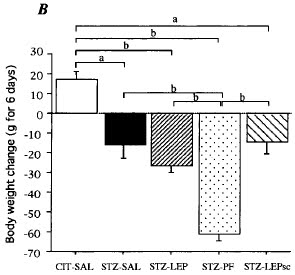
So now let's look at weight change. During the 6 day experiment the non diabetic control rats gained about 15g. The hypoinsulinaemic groups all lost 15-25g bodyweight (except the semi starved group in column 4, starvation of type one diabetics is not advised, ND for leptin in the above graph wasn't that they didn't look for leptin, it's just the amounts present where below the limits of their assay).


This is irrespective of whether they were spilling glucose through their kidneys or not. Hypoinsulinaemia allows lipolysis. Drop insulin and you drop fat, however much rat carbohydrate-crap-in-a-bag you eat. Intracerebral leptin does not stop this.

Now let's look at food intake:


STZ diabetic rats become hyperphagic. At least when they are fed on rodent chow and allowed free access. High carbohydrate, low fat. As the authors point out this does not happen if you feed a high fat diet but I've blogged about this elsewhere.

I'd just like to consider why this hyperphagia should occur from the hang-glider perspective, rather than the Eurofighter perspective.

STZ rats lack insulin. They do lipolysis to extreme levels and run their muscles on fatty acids. Until there is not a lot of fat left, as reflected by hypoleptinaemia. Down on the ground the cells needs calories but there is not enough fat left for this level of hypoinsulinaemia to provide free fatty acids for metabolism. But it is possible to get blood glucose levels high enough to use non GLUT4 transporters to get glucose into muscle cells (see here). With hyperglycaemia there is a chance of survival. To do this you need marked hyperglycaemia. You need it, so metabolism does its best to provide it. In fact these rats will have been hyperglucagonaemic to help raise their blood glucose.

So the rats will eat a ton of glucose precursor, fail to retain it in the liver due to hypoinsulinaemia, add as much to it, using glucagon, as possible and push glucose in to muscles using the brute force of a concentration gradient. The cost is calorie loss through glycosuria and whole body hyperglycaemic damage. But death is postponed. Life is tenaceous.

The STZ control rats ate over twice as much crapinabag as the non STZ controls while continuing to lose weight hand over fist.... Good old hypoinsulinaemia and the body's adaptation to it.

The paper certainly gives support to the concept that the brain is significantly involved in glucose homeostasis. How this will relate a fat mass set point is a line of thought I'm looking forward to seeing Stephan develop.

I rather like this paper. It doesn't need me to move from my insulinocentric bias for weight loss. Ah, good.

Back to LC for diabetes and adaptation to high carb next.

Peter

Earning a crust

We seem to have had a fair number of diabetic dogs come through work recently. Most of them have presented in ketoacidosis. This is a direct consequence of catastrophic insulin deficiency. Hypoinsulinaemia leads to unrestrained lipolysis with production of ketone bodies to the point of profound metabolic acidosis, vomiting, dehydration and risk of rapid death. Oh, and weight loss.

I keep reading snippets about the unimportance of insulin in the control of weight loss from various sources in the blogosphere, so it's sort of tempting to inhibit lipolysis with a couple of big, high calorie blocks of butter or maybe by an Intralipid infusion (yeugh, soyabean oil intravenously, disgusting). But, what the hell, I'm still a bit of a traditionalist on occasion, so I still shut down lipolysis with insulin.

It doesn't seem to matter how much insulin you inject. Once upon a time I would have reached for soluble neutral insulin and bunged it in by intramuscular injection. I had been considering changing to using a GIK (glucose/insulin/potassium) infusion for ketoacidosis but the loss of any soluble insulin preparation from the veterinary market in the UK has stopped my thoughts along those lines.

So now it's lente insulin (the only formulation we have left) by subcutaneous injection and aggressive fluid therapy to allow its absorption. Ultimately it doesn't matter. Any old insulin at almost any old dose rate will inhibit lipolysis well enough to get ketone production under control. You then start seriously supplementing with potassium while catching the hypoglycaemia with an iv glucose infusion as soon as the insulin level in the blood gets high enough to start doing things other than inhibit lipolysis..........

Replacing the missing insulin inhibits lipolysis first. As the blood insulin level increases it then shifts potassium from plasma in to cells. Still higher levels get GLUT4s on to cell surface membranes and facilitate glucose transport.

This is utterly basic A&E work.

Of course the lipolysis of weight loss might just be different from the lipolysis of ketoacidosis. I dunno. Stranger things have happened.


The other thing which has happened is that I have accumulated a couple of these patients who have turned out to be unstable diabetics. They are fascinating cases. You have to understand that as a heretic I try keep my nose out of other clinician's cases, especially diabetic dogs. The basic standard veterinary approach to diabetes is to feed your patient a meal of utter crap, mostly made of sustained release carbohydrate, and cover it with an industrial dose of 12 hour acting lente insulin. Repeat every 12 hours. You can book the cataract surgery for a year's time on the day you make the diagnosis.

The first patient, I'll call her Grace, is a spaniel with a two year history of dry eye, failure to produce tears. A sort of type one diabetes of the eye... What does dry eye have to do with diabetes? Dr Penny Watson of Cambridge Vet School gave a very perceptive presentation about chronic pancreatitis leading to diabetes at the 2010 BSAVA congress. In dogs pancreatitis is often a chronic inflammatory disease which can end up as a "type one like" diabetes syndrome or, alternatively, as an exocrine secretion deficiency giving a failure to digest food. Occasionally both. Which happens to occur in a given individual is probably a genetic lottery.

This dog had had dry eye well before her pancreatic beta cell failure. Dr Watson pointed out that dry eye is an autoimmune attack on the tear producing glands and the attack is aimed at ductal tissue. Stem cells for pancreatic beta cells are derived from pancreatic ductal tissue, which is similar enough to tear gland ductal tissue to produce an association, both diseases in the same patient. Cocker spaniels are far more commonly affected than other breeds. She had some absolutely amazing immunohistochemistry slides.

A sort of Sjögren’s Syndrome of the pancreas, probably another gift of gluten.


The other patient is a middle aged terrier, let's call him William. He has a two year history of chronic hepatopathy before presenting as a type-one-like diabetic. I'd guess he has a combination of non alcoholic fatty liver disease combined with non alcoholic fatty pancreatic disease. He was on a diet of commercial ultra crap, rice mixed with a mess of enzymically degraded protein to limit pre existing skin allergies. Imagine trying to catch the glucose spike from a bowl of white rice with a slow onset sustained release insulin. That initial spike of blood glucose was being caught, too late, with an enormous dose of lente insulin. Two hours later he would have a blood glucose of around 10mmol/l, but dropping like a stone. Suddenly the next reading would be back above 30mmol/l. Dr Bernstein doesn't have a lot of time for the Somogyi overswing. I do, certainly for this dog. The liver is loaded with glycogen, it panics and dumps a fair dose of glucose to (over) correct the incipient hypoglycaemia.

With the standard management approach both dogs had immediately come out of ketoacidosis and had gained weight over several weeks. Did I mention that insulin inhibits lipolysis? Ok, I'll drop it in to casual conversation again. Insulin inhibits lipolysis. Weight gain? Now there's a surprise. Of course there is no ketosis but also no suggestion of normoglycaemia at any stage of a 12 hour glucose curve either.

For some reason Grace had been dropped in to the middle of an afternoon consulting session for a random, post absorptive blood glucose check with me, presumably to adjust her insulin dosage. I wasn't her clinician. I think this reading was somewhere around 25mmol/l. She was ravenous, depressed and polydipsic. Next morning I had her admitted, halved her insulin and fed her a can of cat food with a carbohydrate content of approximately zero, except whatever cooked liver was in the can. The curve came down from somewhere over 35mmol/l to about 14mmol/l and stayed there. We've incremented her insulin up and are aiming for peak blood glucose below 10mmol/l and post absorptive levels below 7mmol/l. Probably the best we can do with lente insulin.

William came to me because lente plus ultracrap was giving completely random blood glucose levels. His owner had been offered referral to an endocrinologist or to see the weird in-house vet who didn't feed sugar to diabetics. That's me. They chose to see me for some reason.

He behaved similarly to Grace when fed all meat cat food and half dose insulin, which is good but we probably need better glycaemic control if we are going to get his hepatopathy to halt. We're getting post absorptive glucose levels between 5mmol/l and 7mmol/l but there is a post feeding spike to over 14mmol/l, which suggests there is a lot of liver in the cat food to provide significant glycogen in the diet. But so far he's a lot more stable now than he ever was on ultracrap.


So why low carbohydrate? Why not simply adjust insulin to cover normal diabetic crap-in-a-bag?

This comes down to the difference between exogenous insulin and pancreas secreted insulin.

Let's recap the two main functions of insulin. First is the inhibition of lipolysis, I may have mentioned this before. This bit is easy.

The next is the suppression of glucose release from the liver. This is utterly core to normoglycaemia. This is not quite so easy.

This is because insulin is normally produced by the pancreas and it travels directly to the liver. There is first pass metabolism by the liver, lots of it. The liver extracts between 50% and 80% of all of the insulin produced by the pancreas. Relatively little ever gets to the systemic circulation. This residue is what should be controlling adipocyte function.

If we turn this on its head we can say that we need to provide relatively high levels of insulin by subcutaneous injection to achieve those levels at the liver which would normally be delivered from the pancreas. But we end up not just bathing the liver with this specific high concentration of insulin. To reach "pancreatic" concentrations at the liver, from a subcutaneous injection site, we will have to hit the adipocytes far harder than we want to. We might well achieve adequate control of hepatic glucose output but at the cost of suppressed lipolysis. Weight gain. And hunger of course.

You could add in a third role for insulin as the management of dietary carbohydrate, ie portal vein glucose sequestration in to the liver and its metabolism by muscles when it spills over in to the systemic circulation. Generally I regard this as what Douglas Adams described in the Hitchiker's Guide to the Galaxy as an SEP. This is a "Somebody Else's Problem".

You want to do that? Fine, you sort out the mess.

I really have to discuss this in some detail because it is perfectly clear that non diabetic humans, so long as they have a functional physiology, can generally deal with massive amounts of carbohydrate rather well. So well that they can lose weight, rather a lot of it, by eating a diet of potatoes alone. This perfectly compatible with why LC is the logical and necessary approach to diabetes. That needs a separate post with a few links to pubmed rather than me rambling on about how I earn my living.

Peter
I have net access again, broadband rather than a mobile phone dongle with intermittent connection that would only talk to my wife's PC because my mac has not needed any sort of system update since a very long time ago!

Posts are coming and I'll try to do something with the pile of comments which need moderating with some attention and a whole stack of emails too.

Woo hoo, click and page loads, no 10 minute wait, that's good!

Tuesday, December 28, 2010

Anacetrapib and phytotoxins

Just starting to find a little time to post. This seems like a worthwhile snippet as a follow on to the anacetrapib post, easier to put up than the cooking epics on insulin and the liver, parts two onwards........

Ok, the usual recap:

First there was cholesterol. It was bad, life was simple.

Then came Good cholesterol, HDL battling the Bad cholesterol, LDL.

Then there was Good LDL, large buoyant battling with Really Bad LDL, small dense LDL, sdLDL.

Not only that but native LDL appears to be harmless, it's only oxidised LDL which is the killer, oxLDL.

So the evil sdLDL is only really evil because it is more easily oxidised than fluffier LDL. Maybe, but in general I tend to have glazed over by now, befuddled by the blur of the moving goal posts.

But just occasionally something does grab my attention, especially if it markedly deepens the hole being dug for itself by the lipid hypothesis, like anacetrapib.

It was thanks to Dr Davis that I grasped the concept of CETP inhibitors as eliminators of sdLDL. That's what they are. If you believe in the lipid hypothesis it must be pretty interesting to have a drug which virtually eliminates sdLDL while increasing the body count for cardiovascular deaths, even if 4 dead out of 808 vs 1 dead out of 804 does not reach statistical significance.

But the real gem from Dr D was the finding that anthocyanins are CETP inhibitors. You no longer need to sign up for the next anacetrapib trial to die of a heart attack in the cause of the lipid hypothesis. You can buy a do-it-yourself CETP inhibitor in the form of a purple plant dye.

EDIT pre posting: It always amazes me that someone as perceptive on blood glucose, and indirectly on blood insulin, as Dr Davis can still believe the lipid hypothesis. Really believe. Fascinating.

There now, we all know plants are all natural, healthy and safe. Perhaps that includes recreational plants like Deadly Nightshade, Nux Vomica and Henbane. As an alternative to anacetrapib you can only hope the anthocyanins don't work!

If they do work at least you might have the consolation that you died with cracking lipids.

Peter


PS, taken from here on flavonoids, discussed here:

"However, a similar decrease in protein oxidation [on flavonoid elimination], in 8-oxo-dG excretion and in the increased resistance of plasma lipoproteins to oxidation in the present study points to a more general relief of oxidative stress after depletion of flavonoid- and ascorbate-rich fruits and vegetables from the diet, contrary to common beliefs."

Want oxidative damage? Munch those flavonoids; and the anthocyanin flavonoids come with the added toxicity of CETP inhibition. Mmmmmm, purple fruit!

Sunday, December 12, 2010

High fat diet and fertility


Not likely to re establish posting in the next few days (!!!!!) but she is lovely!

Peter

Saturday, November 27, 2010

The anacetrapib giggle

Stan has a link up to the full text but here is the fun table:


My summary is that a much larger study is desperately needed to confirm that the 300% increase found in cardiovascular mortality is a direct effect of anacetrapib. An even larger study is also urgently required to demonstrate statistical significance for the more modest increase in all cause mortality caused by this drug.

Volunteers should join the queue marked "idiot", unless they are certain that they will get in to the placebo group.

Peter

Still no blogging but this was too fun to skip.

Sunday, October 31, 2010

Hepatic extraction of fructose

EDIT on 2nd March 2011. This post is incorrect! I'll leave it up as a reminder to myself to check all facts, even when net access is very limited. The pancreas monitors enteric glucose hormonally, not by direct access to the portal vein blood flow. It gets as much or as little fructose exposure as any organ than the liver. Mea culpa. The links are good, so the post has some use still. Thanks to Kurt for catching this one for me. END EDIT


OK, still no posting except for this brief note which is only delivered because the clocks changed, Daniel had a disturbed night and we both have been wake for several hours. Another heavy clinical week to come as of tomorrow... I publish the non-viagra comments on older posts by a brief mouse click but still don't get time to comment back and that will probably apply to this post too. That's just how it is at the moment. Tee hee, probably means there are a ton(ne) of typos in this post too!


Over the last few months I've tried to keep up with my favourite blogs (difficult because work blocks access to all blogs). Many people commented on the fructose and cancer article via Reuters. I'd just like to stick a few observations down about it and about hepatic fructose extraction.

Don over at Primal Wisdom has a nice post discussing the subject and its possible implications. But does fructose feed cancer in vivo? Does it even get to any cancer cells outside the liver and gut?

This led to a follow on post about hepatic fructose extraction, with a nice paper from Japan in Diabetes Care cited. It's unfortunate that ref 11 and ref 13 from this article are both unavailable, even in abstract form. One title specifies investigation of splanchnic blood levels of fructose, which is a very vague term but might include portal vein from gut to liver and might just, if we were lucky, include hepatic vein concentrations, which would allow us to see hepatic extraction rate and systemic penetration.

This would be nice as the second reference's title only seems to specify the role of the liver in the mop-up following intravenous fructose administration. Obviously intravenous fructose bypasses hepatic extraction, so it might not say too much about dietary fructose penetration in to the systemic circulation.

When we look at the micro molar concentrations of fructose (as opposed to milli molar for glucose) in serum as measured in DC article we are looking at venous samples. If the fructose in these samples has come from the diet in the gut it will have been fructose extracted by the liver, then pumped around the body, been fructose extracted by the tissues and only then finally arrived at the sampling needle. It looks like an open question how much fructose comes past the liver and hits the tissues themselves, to feed cancer cells.

You might get more information by measuring the arterial concentration of fructose, as opposed to the venous concentration. Arterial concentration is the hepatic vein fructose diluted in the the full venous return/cardiac output. This would give an indication of hepatic fructose passage without the complication of tissue extraction. But you can't have what's not in the paper and arterial blood samples are a little harder to obtain than venous samples!

EDIT: Cynthia found the abstract to the rat paper. Hepatic extraction is around 50-70%, this dilutes in the venous return but there is still a significant surge through the systemic circulation. This is particularly interesting as humans do metabolise fructose in their muscles, which might just have something to do with systemic as well as hepatic insulin resistance from fructose. I wish I had the time to follow these leads. Abstract text in the first comment. Ta Cynthia. END EDIT

The DC paper does suggest, among several explanations, that the higher venous fructose in diabetics might come from glucose via the polyol pathway. Glucose to sorbitol, sorbitol to fructose. This endogenously generated fructose then drops in to the venous system and gets sampled before going off to liver and/or muscles for metabolism.

So there are a lot of "if"s, "but"s and "maybe"s.

However, the cancer feeding effect of fructose was noted in pancreatic cells. Pancreatic cells sit in the portal vein to monitor gut glucose absorption. They also get hit by the full load of fructose arriving after a couple of cans of soda. It doesn't matter how much fructose the liver extracts if you happen to be a pancreatic cell sitting in the portal blood flow.

You get nuked.

If you are a pancreatic cancer cell you get fed.

Peter

BTW NAFLD has it's parallel in non alcoholic fatty pancreatic disease. Both go from normal through fatty infiltration to chronic inflammation to scarring to neoplasia. Both organs sit in the portal venous drainage from the gut. Another few posts there but...

Friday, October 15, 2010

A heads up

Just a brief heads up, especially to people who have emailed me off blog, apologies for the near total lack of replies, there really is no net time worth speaking of at the moment. Too busy cutting and stitching lots of stuff and other things! When we get in to a house of our own things will get back to some semblance of normality but that is not looking like happening in the immediate future.

Peter


Among the many links I've not had time to follow there was this link which I did manage to clicked on and couldn't leave alone. Thanks Elizabeth.

“It’s like an epidemic, in the sense that they’re infected with these wrong ideas, and they’re spreading it to other researchers through journals.”

Hee hee, Ioannidis does meme watching...

Thursday, September 23, 2010

von Gierke's disease

I'm just taking a quick break from packing boxes and trawling through hepatic insulin resistance related to metabolic syndrome because I got (as always) side tracked. By hepatic glycogen storage this time, rather than lipid storage.

You have to giggle about glycogen storage disease type Ia. It may not be much fun if you have it, but at least you are protected against premature cardiovascular disease.

About von Gierke's disease:

"Glycogen storage disease type Ia (GSD-Ia) is characterized by hypercholesterolemia, hypertriglyceridemia, decreased cholesterol in high density lipoprotein and increased cholesterol in low and very low density lipoprotein fractions."

Of course, with lipids like those, you should die of CVD at a very early age. But you don't.

As people may recall my current hypothesis for the cause of premature CVD is that it is triggered by Purple Spotted sdLDL, something which is NEVER measured by lipidologists. This is hardly surprising because I made it up. Taking a lesson from the lipid hypothesis founders there.

So folks with glycogen storage disease type Ia have the worst possible lipid profile you can imagine and no premature CVD.

To explain this paradox (gasp in awe at the explanations) you can look at antioxidants like uric acid or do very clever things with cholesterol efflux mediators or hypothesise about adiponectin. Take your pick.

Guess what. People with glycogen storage disease type Ia are virtually never hyperglycaemic or hyperinsulinaemic. In fact hypoglycaemia can be a serious problem for them. But they don't get heart disease. Funny that.

Oh, and they are told to avoid fructose too (haven't checked why, but it seems like a good idea)... Perhaps I'm wrong about Purple Spotted sdLDL, it could just be that it's made of fructose rather than sucrose!

Peter

Saturday, September 18, 2010

Fathead Supersize Me and Sweden (2)

An addendum to the mouse trans fat fibrosis paper: It's junk. Utter junk. Even the title is wrong. There are NO trans fats in the experiment, NONE what so ever!

The mice were fed on the Surwit Diet. Here's the pdf from Research Diets.

I thought medium chain trans fats were a bit of a strange animal....


So the mice are being fed on fully hydrogenated coconut oil, which has minimal PUFA to begin with and gets hydrogenated to fully saturated, mostly medium chain triglycerides. Plus non hydrogenated soya oil, which is mostly omega 6 PUFA and a little omega 3 PUFA.

The ONLY source of carbohydrate in the diet was sucrose and maltodextrin, which made up 25% of calories. To which they added sucrose in the drinking water, plus added fructose in the drinking water.

THERE ARE NO TRANS FATS IN THIS DIET.

Fructose, beyond human comprehension, with adequate soya oil, is enough to fibrose a mouse's liver. Not even Bill Clinton could eat this much fructose a day for life.

Who scrutineered this paper? Who wrote the title? How much money was wasted? What is happening in the world?

Arghhhhhhhhhhhhhhhhhhhhhhhhhhhhhhhhhhhhhhhhhhhhhhh!

Ouch. Ouch. Ouch.

Ouch.

I'm trying to stop banging my head on the table but (Ouch)......

Peter

Thursday, September 16, 2010

Fathead, Supersize Me and Sweden

I generally ignored this paper in 2008 as it didn't look particularly interesting and seemed mostly about fast food bashing, where the fast food included a large amount of sugar and starch. A bit like a real life Supersize Me, but with genuine average food intakes provided and individual responses in ALT levels, a marker traditionally associated with liver damage, also provided.

If anyone wants to eat 285g of sugar a day then they deserve whatever they have coming to them. What they have coming is an ALT increase which correlates with either carbohydrate or sugar intake by three weeks in to the feast. Not with fat.

I found the lack of association with fat disappointing. Sweden is a country fairly replete with trans fat and a little arithmetic applied to Table 1 (LeenaS describes these as "hidden fats") suggests that trans fat intake went from about 6g/d to 24g/d during the over feeding period of the study. This is not quite at the level of Crisco poisoning but I was still disappointed to see no discernible association with ALT. Ah well, you can't have everything.

Now I remember Tom Naughton nuking himself with trans fats during Fathead to the point of lowering his HDL, but otherwise he developed no suggestion of metabolic syndrome. But then Tom engaged his brain before drinking bucket loads of fructose and desisted from such stupidity. The fructose trick is for anyone with more Spurlockian intelligence.

To go back to Sweden: Gross overfeeding with "fast food" elevates your ALT. This is sort of boring because no one in their right mind is going to eat that much fructose in a month, which sort of defines Spurlock.

But was anyone still awake by the end of Supersize Me? Remember how long it took him to lose weight on his girlfriend's vegan cooking?

Now the question is, does this translate across in to the Swedish ovefeeding group? Well that was answered by a follow on study looking at the participants two and a half years down the road.

They're still fat. On average.

Something breaks in a month of overfeeding with trans fats and sugar. That is fascinating. Now you could argue that the volunteers got the taste for junk food, that their fat cells got stretched, that they were already self selected for being comfortable with gaining weight to take part in the study etc. I'd like to look a little more closely at liver pathology.

Elevated ALT is traditionally assumed to indicate liver damage. But there might be circumstances where you make more ALT in each cell, especially if a lot of amino acid processing is going on, so get benign ALT elevation. No one had a liver biopsy so it was impossible to find out exactly why the ALT went up.

Now, from a pathologist's point of view, a fatty liver is completely reversible. There is nothing permanently damaged in each hepatocyte or in the structure of the liver. Hepatic inflammation is also theoretically reversible. Those old leucocytes can leg it out just as easily as they legged it in.

But fibrosis, that's a different matter. Fibrosis is there to stay. This is at the micro architectural level. We're not talking cirrhosis (yet). No pathologist expects a fibrosed liver to go back to normal. It may adapt, regenerate, keep you alive, yes. But it's not normal. It will never be normal.


I picked up a link to a mouse study in which they fed chow, Super Crisco (medium chain trans fats, what are they?) or Super Crisco plus fructose enriched sucrose via the drinking water. The rest of the diet is not in the abstract so who knows what else they did. But it was the Super Crisco plus fructose/sucrose in the drinking water which made all of the headlines.

Super Crisco appears to be bad for your waistline but may not, on its own, produce the irreversible changes in the liver seen in the mice who combined it with HFCS. As far as you can tell from the abstract.

A diet replete in trans fats and HFCS fibroses your liver.

Translating from the Swedish volunteers and these poisoned mice to our two film directors:

Tom Naughton should be fine with his low fructose high trans fat diet and Spurlock should have aged his liver by a few years (in terns of insulin sensitivity) during his month of self poisoning on trans fats because he combined them with fructose to push his ALT through the roof.

I'll try and put this in to a physiology context when a little more time comes my way.

Peter

BTW: A methodological note from the initial Swedish study which adds the "human element" to the mind set of the "scientists" running it:

"If the subject was not able or willing to ingest the hamburger-based diet at any stage, it was changed to whatever food the participant accepted with the highest priority to achieve the calculated caloric intake and also, if the study subject still found it acceptable, a diet rich in protein and saturated animal fat."

My emphasis.

As always, it's nice when people nail their colours to the mast.

I see from Table 1 in the follow-on study that one man and one woman had actually reduced their weight to below their pre study weight by 2.5 years. I just wonder whether they were the ones who refused the trans fats of the hamburger diet and went with animal fat and protein to source their excess calories. No one is saying.

That human element gets everywhere!

EDIT: See Patrick's notes in the comments about the group leader from the hyperalimentation studies. A different impression from the published papers. There is hope for Sweden. Good.

Tuesday, September 14, 2010

Axen, Axen (3) and Hawks

John Hawks put up this excellent quote in his post James Randi on scientists

From Randi, J. 1988. "The detection of fraud and fakery." Cell Mol Life Sci 44:287-288:

"Scientists are very easily deceived. They think logically, extrapolate possibilities from evidence presented, assume (with a good probability of being right) certain aspects of the observed data and draw upon their past experience in coming to decisions. This is to say that they act very much as all humans do, struggling with sensory input to derive new facts from it. But scientists do this with a certain authority and certainty born of their training and discipline. They are thus excellent candidates for being flimflammed by a clever operator who is aware of the fact that scientists seldom bring the human element into account."

Axen and Axen do not do either fraud or fakery. Their data are real. But the human element is essential.

Peter

Wednesday, September 01, 2010

Axen and Axen (2)

OK, the biggest mistakes in A&A's 2006 paper was, in my book, Atkins bashing. There, I am biased. Citing the Atkins Diet specifically and using this citation as the basis for their study design is problematic. I don't know if A&A ever read ref 1 as cited but, believe me, these rats were not on the Atkins Induction or the subsequent Ongoing Weight Loss phases. Generally the Atkins diet involves Food plus artificial sweeteners and some easily avoidable non-foods such as soy flour. And vegetables.

So what did they do? They took a group of lab rats and made them obese with trans fatty acid enriched Crisco as 60% of their calories. They then split the rats in to two groups, one was given 60% of calories as carbohydrate through out. The other group was given 5% carbohydrate for 2 weeks then 15% carbohydrate for a month, à la Atkins. Both groups were moderately energy restricted, dictated by a somewhat random decision protocol.

There was a parallel group eating crapinabag (CIAB) throughout (no Crisco). Glucose tolerance tests, with insulin measured at 20 minutes, were performed at various time points.

What went wrong in 2006?

Things started well with the Crisco rats having higher blood glucose at 10 minutes in to the GTT than the CIAB rats. Insulin levels were a lot higher in the Criso rats 20 minutes in to the test by which time glucose was identical between Crisco and CIAB groups. That's Graph A. Crisco causes insulin resistance.


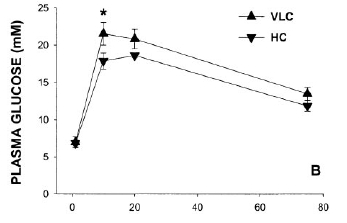
Things were going reasonably well for Atkins bashing at the end of the two week "Atkins Induction" phase. During GTT the 60% carb group were slightly lower in glucose and this made p<0.05 at 10 minutes. However the cracks are beginning to show. The "Atkins Induction" group had an insulin at 20 minutes in to GTT of 600pM, the 60% carb group needed an insulin of over 900pM to achieve the marginally lower glucose level at this point. The insulin values were, luckily for A&A, not significantly different. Fasting insulin at this point was also lower in the "Atkins Induction" group. A&A were lucky on the p values here too. Here's graph B with that spiked glucose at 10 minutes:


By the end of the experiment at 14 weeks the Atkins Group had been given more (15% of calories) carbohydrate. The GTT at this time point is shown here:


Now you need to get your glasses on for this one. Can you see any difference between the "Atkins Ongoing Weight Loss" (VLC) group and the 60% carbohydrate (HC) weight loss groups? No? Me neither.

Insulin values were slightly better in the 60% carb group but again nothing significant. Both weight loss groups had lower insulin values than the CIAB group! All NS again.

So there we have it: Atkins Ongoing Weight Loss, as interpreted by A&A, gives a GTT curve which is superimposed on the 60% carbohydrate weight loss group. ATKINS is GOOD!

There is a load of bollocks in the discussion about the impaired insulin response in the Atkins group in graph B. To me shifting glucose with a lower insulin level is good, not bad. The spike at 10 minutes is the only saving grace to the funding generating ability of this study.

But graph C is just hysterical.

Okay, A&A are not stupid. They worked out exactly what went wrong in graph C and what was going well in graph B.

So they went out and got more funding to demonstrate CONCLUSIVELY that the Atkins Diet makes you diabetic. They got that funding. These people are good, make no mistake. They got the desired result second time round. How many people get a second chance like this? They published in 2010.

Here is graph a from 2010, directly comparable to graph A from 2006.


Very similar but tidied up in 4 years of refining the model. Or maybe the CIAB has been improved. Anyhoo, same result. Crisco does nasty things to GTT curves.

Next is graph b, which is like graph B above but is after a month rather than 2 weeks and has the on going Crisco group included. The very low carbohydrate group is looking a lot like the Crisco group by now...


But here is the Money Shot in graph c from 2010. Just look at the Crisco curve (HF) and the 5% carbohydrate (VLC) curve. Just look at that fit!


I told you these people were good!

But also go back and look at the blooper graph C from 2006.

So what is going on?

There is a nice pointer in line seven of Table 2, "Soleus TAG". This is the amount of intra myocyte lipid in a typical muscle. It is a marker of how reluctant that muscle is going to be to accept glucose. Two groups have high soleus TAG. The Crisco poisoned (HF) group throughout and the VLC group at 16 weeks.


The explanations for why these two groups have high soleus TAG is likely to be different. Both will, in all certainty, reflect elevated FFAs in the plasma. But the Crisco poisoned group will have elevated FFAs, 24/7, despite 15% of calories as starch. We know from the 2006 blooper that 15% of calories as starch will give a GTT curve in VLC rats which matches the 60% carb group EXACTLY. Not so if you are Crisco poisoned.

The VLC rats on 5% of carbs will have elevated FFAs 24/7 because they would be dead without them. They are on a starvation diet of which only 5% is carbs. Without FFAs they would run their muscles on glucose. They don't get enough glucose per day to do this and still keep their brain alive. Death is not an option.

So the Crisco group has elevated TAG in soleus muscle in the presence of carbohydrate in the diet. It's pathological. The VLC group has elevated TAG in their soleus muscle because they had minimal free glucose available, which is physiological.

BTW either fasting or a brief period without carbohydrate will promptly elevate muscle TAG in humans. It is an utterly normal response to a reduced supply of glucose. The actual signal for muscle insulin resistance is not likley to be the tri acyl glycerol molecules themselves because athletes have bucket loads of this without insulin resistance. More likely is a more ephermeral moiety such as Acyl-CoA molecules or diglycerides which more closely reflect FFA supply. In a GTT the glucose supply is massively supraphysiological. For insulin sensitivity to return to LC muscles it takes time for insulin to spike, insulin to get to adipocytes, adipocytes to respond to insulin, FFA level in blood to drop and FFA derivative level in muscle to drop. It's hardly surprising that the 10 minute glucose peak was higher in the VLC rats during GTT. However, as soon as the muscles clear FFA derivatives they are still geared up to go with glucose, nae problem, nae bother. I'll come on to issues with insulin later. Obviously the Crisco poisoned rats are obese and their adipocytes will have an inability to suppress FFA release in response to insulin. That's how it is if you eat Crisco.

Let's look at the insulin responses. All of the fasting insulin levels were about the same. Obviously the VLC had the lowest insulin and almost certainly the lowest HOMA score although p might still have been > 0.05. By week 16 the insulin response to GTT was interesting.

The VLC rats mimicked the Crisco (HF) group's glucose curve. But they did it with just 1.79ng/ml of insulin. The Crisco rats needed 2.93ng/ml of insulin (p<0.05). The lower curve with open diamonds is the 60% carb group. The curve looks good until you realise that these rats needed as much insulin as the Crisco rats to achieve this beautiful curve, nearly twice that in the VLC group (2.95ng/ml vs 1.79ng/ml, p<0.05).

So which rats are the most insulin sensitive? Not the Crisco rats. I'll accept that. Just say no to Crisco... It is completely arguable between the VCL and 60% carb group.

BUT. What would have happened if the VLC group had produced the same insulin response as the 60% carb group? Impossible, scream Axen and Axen. The VCL group have a blunted insulin response. It makes them well on the road to diabetes, metabolic syndrome, blindness, dialysis, we need the funding...

Calm down Peter, bit OTT there!

Except metabolic syndrome is characterised by elevated insulin, not depressed insulin. Duh.

I have to thank Helen who placed a comment on another post. She pointed out that glucokinase in the pancreas, the enzyme which the pancreas uses to sense glucose in the portal blood, is down regulated in response to carbohydrate restriction. Oh.

It is, err, up regulated in carbohydrate surplus.

This is what "bit" Axen and Axen in 2006. It looks like 15% of calories as carbohydrate in a VLC non-Crisco situation is adequate (on a high protein background) to allow pancreatic insulin secretion in response to glucose to become identical to that produced by rats on a 60% carbohydrate diet. Muscle TAG and associated molecules will drop too. Hence the overlay of the GTT curves in 2006.

Let us assume, very reasonably, that the VLC rats in 2010, on a 5% carb, energy restricted diet, are not expecting to deal with hyperglycaemia any time soon. They down regulate glucokinase production. Then some joker injects 1g/kg of glucose in to their peritoneal cavity. No one up regulates their glucokinase in 10 minutes, not even Super Rat*. Insulin response is blunted. Hyperglycaemia results.

*Actually Super Rat could do this but she is always busy saving the planet (again) and doesn't have time to help out here.

What would have happened with a few days carb loading in the VLC group before the GTT? Well, we (that "we" includes A&A) know the answer to this from 2006. Did you really think A&A are stupid? How many times do I have to point out that these people are good. Very, very good. They know that to get a "bad" result for VLC you must NOT increase carbs pre glucose load in a GTT.

Does anyone think that neither Axen nor Axen has heard of glucokinase? That would mean they're stupid. They're not, they know that if they allowed 15% carbs for a few days the VLC group would overlay the curve of the 60% carb group. For crying out loud, they published the damned curves themselves!

No. The effect of increased carbs on a VLC is not "unclear" (their word). It adjusts pancreatic insulin secretion to deal with carbs when carbs form a significant part of the diet. That's called physiology!

In summary:

Do A&A have a paradigm to support, a mortgage or two to pay, a living to make, careers to develop?

A few fatties getting injured is of no concern, provided the models can be adjusted to keep the funding coming through.

Will people edging towards type 2 diabetes get injured by a very low carbohydrate diet or will they be injured by A&A's funding success? What if they eat low fat high carbohydrate in the real world? What is hunger?

You decide. Then go eat some fat.

Peter

But not Crisco. Just say no....